St Mary's Chantry House
A rare and significant medieval ruin, which served as the first school in Alnwick.
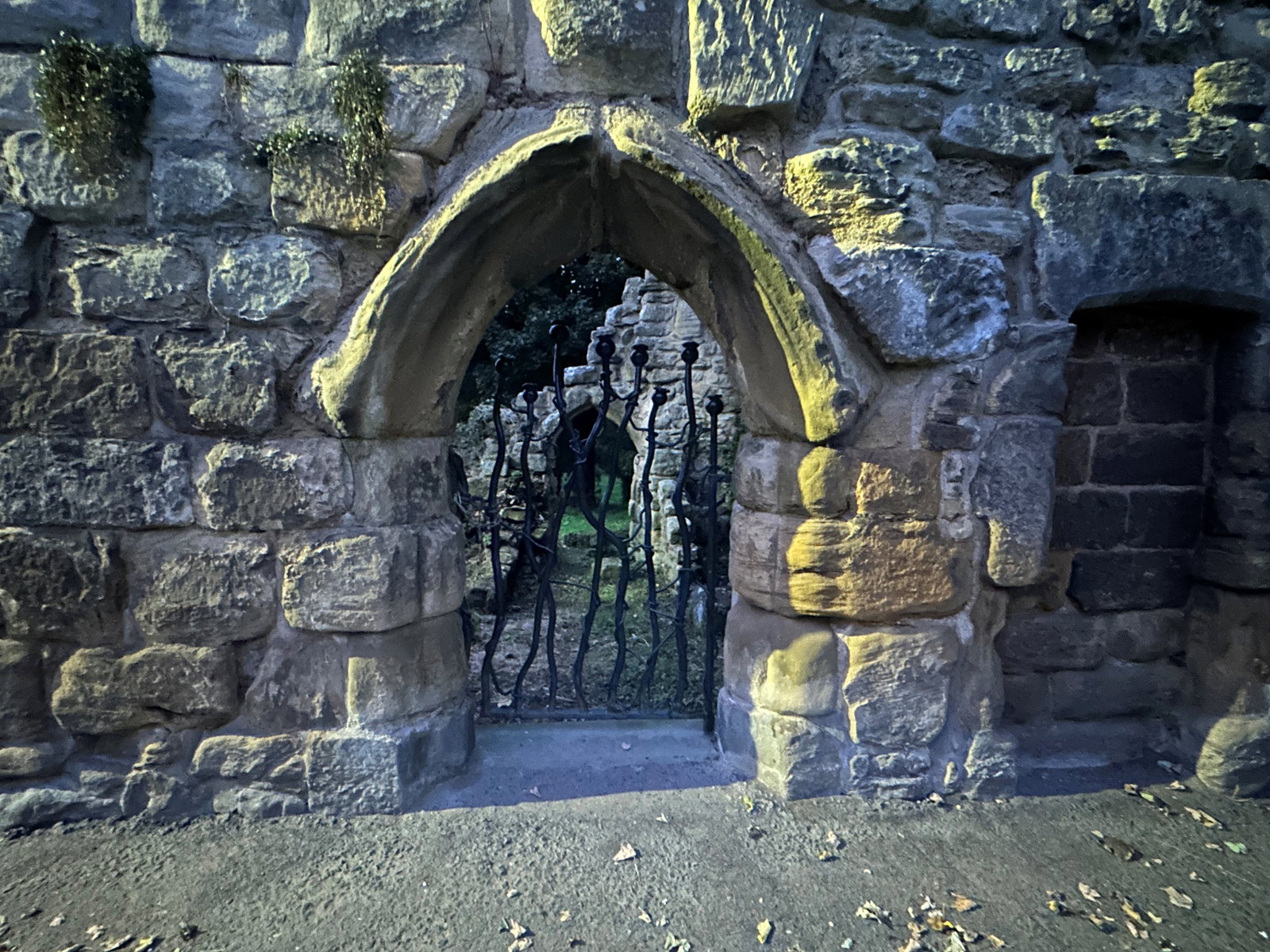
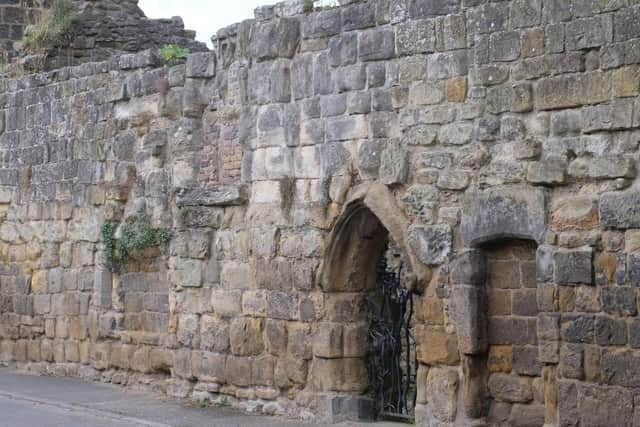
Close to Alnwick Castle, tucked away in an understated lane, I came across a gate guarding entry to an unexplained stone wall. Known as St Mary's Chantry House. This archway once led to the first school in Alnwick and the forerunner of The Duchess School.
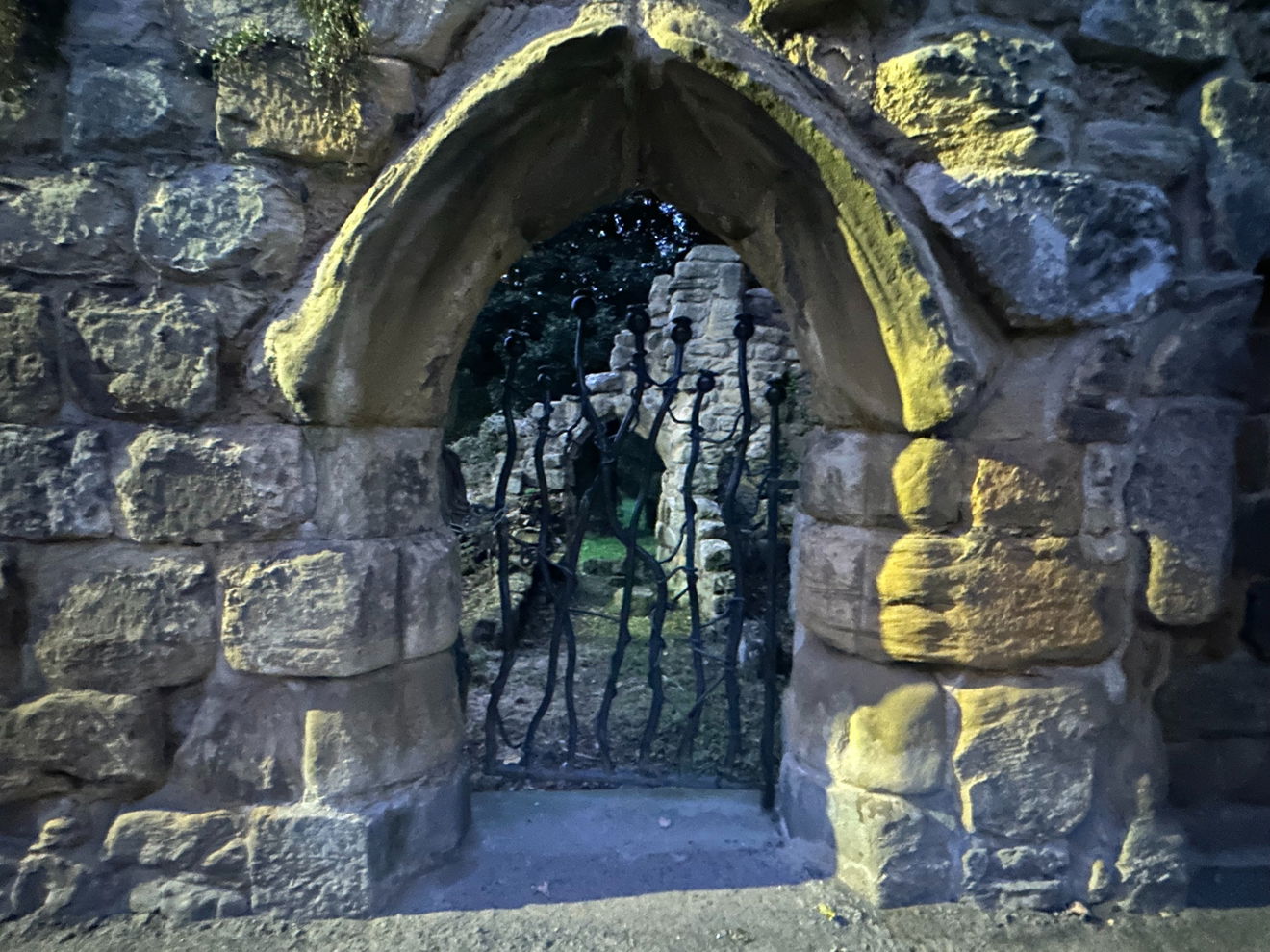
There was something curious about the closed clasp on the steelwork. A bit like a 'Wet Paint. Don't Touch' sign where you know the forthcoming result. You have to have a little meddle and know it won't help! I tried a few times with no success.
In the mid 1400s, this would have been a hubbub of hymns and English. The crumbling stone was a tell tale sign of a life well lived for a building endowed by The Earl of Northumberland and licensed by Henry VI. It was home to two chaplains whose role it was to pray for the soul of the King. That was a job?
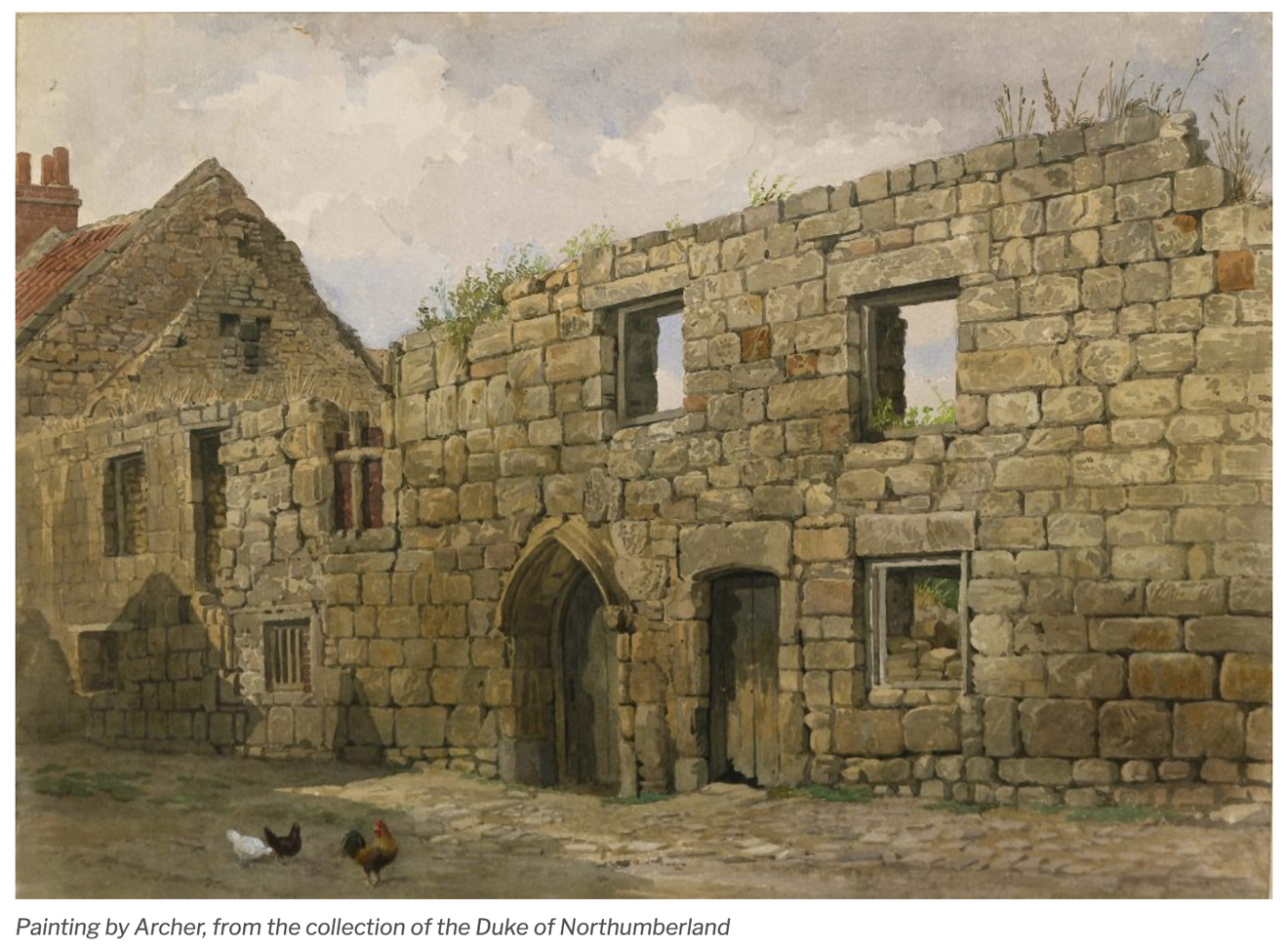
Chantries were religious institutions endowed with land, goods and money. At their heart was the performance of a daily mass for the spiritual benefit of their founders, and the souls of all faithful dead.

Looking through the gate, I could see two medium sized rooms. One of these would have probably been the classroom where the priest would instruct boys from the poor families of Alnwick. This would have been at no cost and they would have been schooled in grammar and music.
The term grammar school comes from the Latin phrase scolae grammaticales, which was used to describe schools that taught Latin grammar. These schools were often attached to monasteries and cathedrals and were intended to prepare students for the priesthood. The term was used in medieval times and paved the way for the modern concept of grammar schools.
Constructed in 1448, Alnwick Chantry House was built to serve St Mary's Chantry Chapel which was housed within the Church of St Michael close by.
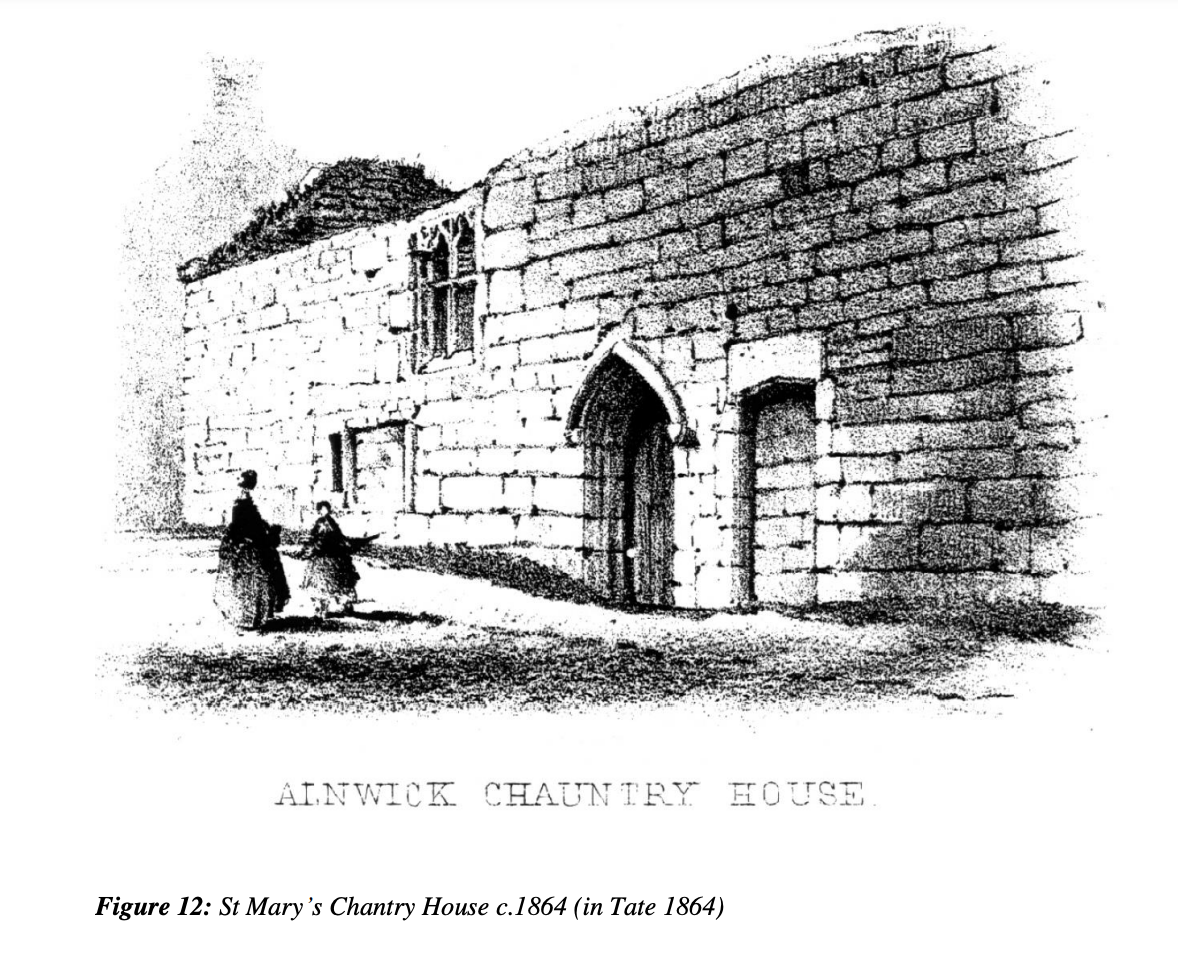
There were signs of a fireplace and of windows on the upper floor that had been blocked up.
A second door appears to have connected to the front door via a stone passageway which exited onto the land behind, towards the river Aln.

The shell of the building is relatively intact with the rectangular walls measuring 17.8 x 6.1m and being about 0.9m thick. The majority of the frame of the building is still standing especially the south wall and west gable. Due to the great age of the building and the range of architectural features above ground, as well as the potential buried artefacts underground, the chantry is of significant national interest and will support research into medieval religious institutions.
The hymns were sung into the 1600s, after the reformation, which saw the dissolution of the Chantry, when finances dwindled and communities declined.
The school was then funded not by the church, but by the people of Alnwick. The school moved to new premises on Pottergate, and St Mary's Chantry was largely lost to the elements.
Very few examples of this type of medieval building are still in existence. It's a Grade II listed building and a scheduled ancient monument so this little locked find on Walkergate was a delightful discovery.
St Mary's Chantry House is not open to the public and there are no plans to reopen it, but it was recently open as part of the Heritage Open Days.
I just had a little peep in on my way home one night, and my long Mr Tickle arms were able to take some photos through the gate to share with you!
There's a wealth of heritage and history within the walls of Alnwick and you could explore for days. Just over the road is Alnwick Castle and the town is full of statues like the Harry Hotspur Statue or the Percy Tenantry Column.
Find St Mary's Chantry House
Where Is St Mary's Chantry House?
- Lat / Long
- 55.41765, -1.710067
- What3words
- vaulting.hardens.paddlers